Enterprise IT Infrastructure — Saudi Arabia & GCC
+966 59 311 7135
[email protected]

 🔍 Click to zoom
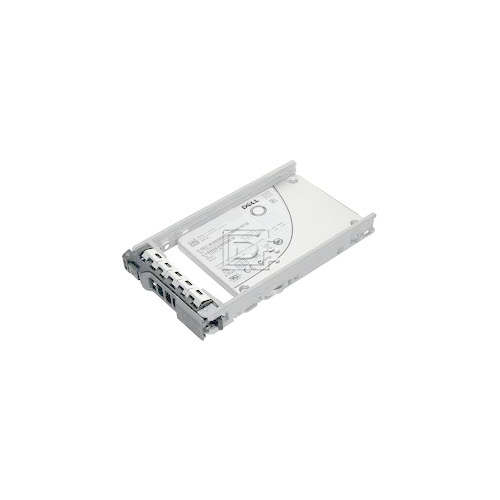
400-AIFT – Dell 400GB Multi-Level Cell (MLC) SATA 6Gb/s 2.5-Inch Solid State Drive
The Dell 400-AIFT 400GB Solid State Drive is a reliable enterprise storage solution designed for Dell PowerEdge servers and business-critical computing environments. Featuring Multi-Level Cell (MLC) NAND flash technology and a SATA 6Gb/s interface, this SSD delivers fast data access, low latency, and dependable performance for a wide range of enterprise workloads.
Built in a compact 2.5-inch Small Form Factor (SFF), the drive is ideal for high-density server deployments where performance, reliability, and efficient storage utilization are essential. The MLC flash architecture offers enhanced endurance and write performance compared to standard consumer-grade SSDs, making it suitable for continuous enterprise operation.
With no moving parts, the Dell 400-AIFT SSD provides superior durability, lower power consumption, reduced heat generation, and improved system responsiveness compared to traditional hard disk drives.
Model Type
Internal Enterprise SSD — 2.5″ SATA (6Gb/s, MLC NAND)
Category
Storage — Enterprise SATA Solid State Drive (SSD)
Key Features
400GB Storage Capacity — Reliable flash storage for enterprise applications
MLC NAND Technology — Enhanced endurance, reliability, and write performance
SATA 6Gb/s Interface — Stable and cost-effective enterprise connectivity
2.5-Inch SFF Form Factor — Optimized for dense server deployments
Low-Latency Performance — Faster application loading and system responsiveness
Enterprise-Class Reliability — Designed for continuous 24/7 operation
Energy Efficient Design — Lower power consumption than traditional HDDs
Solid-State Durability — No moving parts for improved operational stability
Technical Specifications
Specification Details
Model 400-AIFT
Capacity 400GB
Drive Type Internal SSD
NAND Type MLC (Multi-Level Cell)
Interface SATA 6Gb/s
Form Factor 2.5″
Workload Type Enterprise / Performance Storage
Compatibility Dell PowerEdge Servers & Compatible Enterprise Systems
Lead Time 4–6 Business Days
Typical Use Cases
Operating system boot drives
Enterprise application hosting
Virtualization environments
Database acceleration
Data caching and fast-access storage
Small and medium business servers
Mission-critical enterprise workloads
Pricing for the 400-AIFT is quoted on request. Send the quantity you need through the quote form on this page and our team responds with current pricing and lead time.
Yes, the 400-AIFT is listed as in stock. Confirm current availability for your quantity when you request a quote.
Yes. Al-Gazelle is an authorized distributor and supplies genuine Dell hardware with full manufacturer warranty.
Yes. We ship across the GCC — Saudi Arabia, the UAE, Qatar, Kuwait, Bahrain and Oman.